
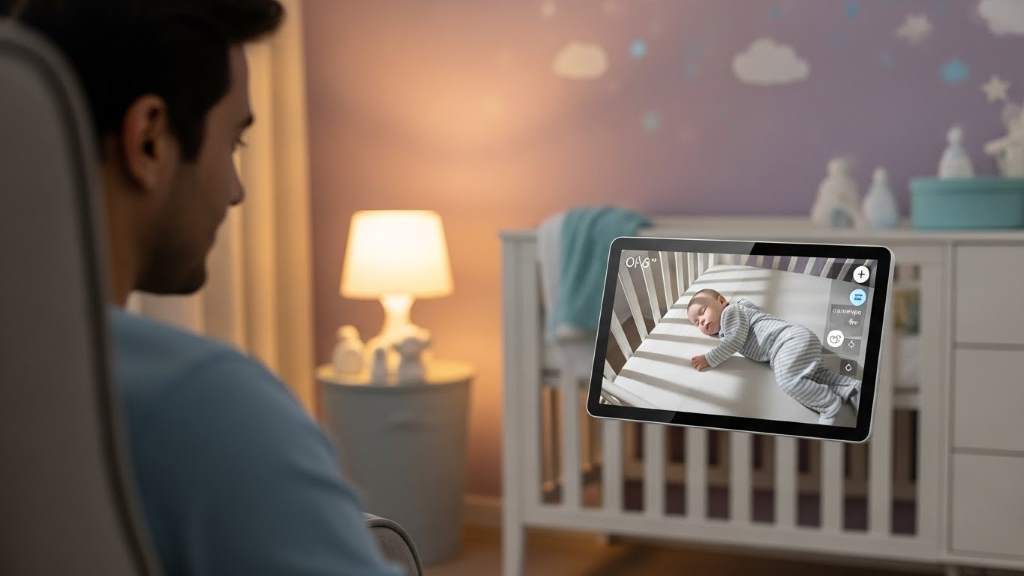
New parents often feel a mix of joy and worry when their little one sleeps in another room. You want to rest, yet you need reassurance that everything stays fine. That is where a reliable baby monitor steps in. Modern options now feature high-definition displays that deliver crystal-clear images, even in low light. For instance, a large screen baby monitor allows you to spot every tiny movement from afar. Moreover, these devices bring peace of mind without constant trips to the nursery.
Experts note that video monitors enhance parental confidence. The American Academy of Pediatrics highlights safe sleep practices as key to reducing risks like SIDS. However, clear visuals help you check positions quickly. According to CDC data, sudden unexpected infant deaths have declined significantly since the 1990s safe sleep campaigns. Yet around 3,400 cases still occur yearly in the US. HD baby monitor displays play a supportive role by letting you observe without disturbing sleep.
Why Choose HD Displays for Baby Monitoring
Parents seek clarity above all in monitors. An HD baby monitor display transforms blurry feeds into sharp, detailed views. You can see chest rises clearly, even at night. This detail matters for quick assessments.
Furthermore, larger screens reduce eye strain during long watches. Many models offer 5-inch or 7-inch panels with 1080p resolution. Consequently, you spot subtle changes faster. Night vision in HD maintains color accuracy in dim rooms, avoiding grainy black-and-white images.
On the other hand, lower-resolution options frustrate users with pixelated views. Upgrading to HD improves responsiveness. Parents report feeling more connected and less anxious.
Key Features to Look for in HD Baby Monitors
Selecting the right model involves weighing several features. Start with screen size and resolution.
- Display Quality: Aim for at least 1080p Full HD. Some reach 2K for extra sharpness.
- Screen Size: Larger panels, like 7 inches, suit detailed viewing. Smaller ones work for portability.
- Night Vision: Infrared LEDs ensure clear images in darkness.
- Zoom and Pan: Remote controls let you focus without entering the room.
Next, consider connectivity. Non-WiFi models offer secure, local feeds. WiFi versions allow phone access anywhere.
Additionally, extras enhance usability:
- Two-way audio for soothing talks.
- Temperature sensors for room comfort.
- Lullabies or white noise options.
- Split-screen for multiple cameras.
Battery life matters too. Long-lasting units prevent interruptions. Finally, ease of setup saves time for busy parents.
Top HD Baby Monitors for Clear Viewing in 2026
Several standout models dominate current recommendations. Experts from sites like Wirecutter, Consumer Reports, and parent testers praise these for HD excellence.
First, the Babysense MaxView shines with its 5.5-inch 1080p split-screen display. It captures fine details, including breathing motions. Parents love the intuitive controls and long range.
Then, VTech models, such as the RM7764HD, feature crisp 7-inch screens. They blend local and app viewing seamlessly. Clear night vision and smooth pan-tilt add value.
Nanit Pro offers overhead HD views with sleep tracking. Its app delivers sharp streams to phones. Many appreciate the insights into patterns.
Eufy SpaceView provides non-WiFi security with a large, clear panel. It avoids hacking risks while showing vivid images.
Owlet combines HD video with health alerts in some bundles. However, focus stays on visual clarity here.
CuboAi stands out for AI alerts and excellent night vision. Parents note the color-rich dark-mode feeds.
Each excels in HD baby monitor display quality. Choose based on WiFi needs or extra features.
Benefits of Large Screen Baby Monitors
Bigger displays change the monitoring experience. You view more at once, reducing constant adjustments.
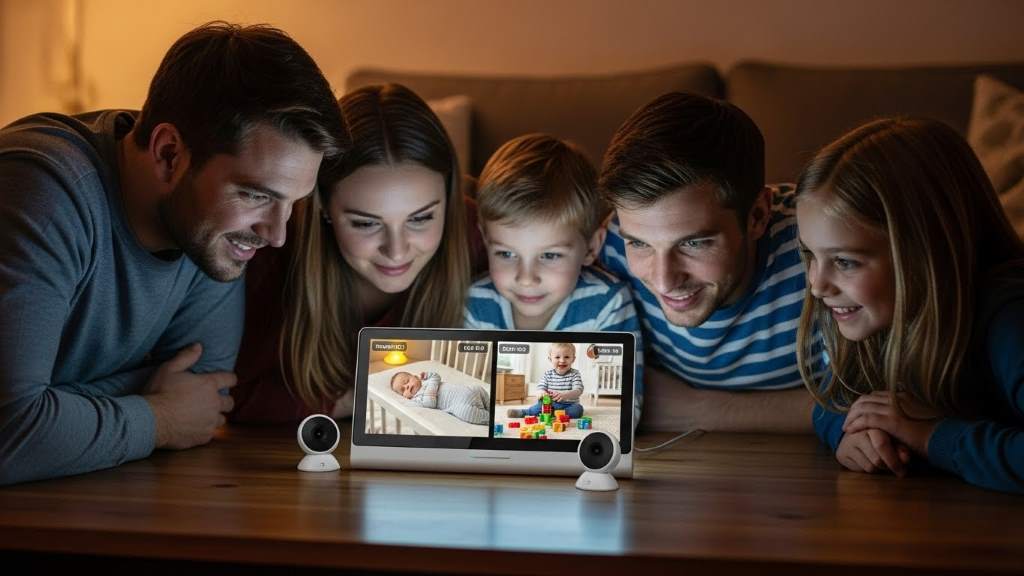
For example, split-screen on large panels watches twins easily. Details pop, helping spot issues quickly.
Moreover, families share views better. Grandparents or partners see clearly from across the room.
In contrast, small screens force squinting. Larger ones ease overnight checks, improving rest.
Studies show visual reassurance lowers stress. Parents sleep better knowing they can glance and confirm safety.
Transitions to toddler rooms benefit too. Large screens capture active play without distortion.
Non-WiFi vs. WiFi HD Monitors: Which Is Better?
Both types offer HD clarity, but differ in approach.
Non-WiFi monitors use dedicated units. They stay secure, avoiding internet risks. Range reaches 1,000 feet in open areas. Setup proves simple, with no app hassles.
However, you stay limited to the handheld device. No remote access when away.
WiFi models stream to phones worldwide. They add smart features like recordings. Yet security demands strong passwords and updates.
Hacking incidents remain rare, but concern some. Non-WiFi appeals for privacy-focused families.
Ultimately, WiFi suits travelers or multi-device users. Non-WiFi fits home-bound reliability seekers.
Tips for Safe and Effective Use
Place cameras wisely. Mount high, angled down, away from cords. AAP warns against strangulation risks.
Follow safe sleep: Back position, firm mattress, no loose items.
Clean lenses regularly for optimal HD performance. Test range in your home layout.
Use volume controls to avoid alarm fatigue. Set sensible sensitivity.
For WiFi, enable two-factor authentication. Update firmware promptly.
These habits maximize benefits while minimizing risks.
How HD Monitors Enhance Peace of Mind
Clear views build confidence. You respond faster to real needs, ignoring false worries.
Many parents share stories of spotting rolled positions promptly. Quick corrections prevent discomfort.
Over time, patterns emerge. You learn cues better through detailed visuals.
Edge cases, like larger homes, benefit from strong signals in HD models.
Overall, investment in quality displays pays off in calmer nights.
Conclusion
HD baby monitors with clear displays revolutionize parenting. They offer sharp, reliable views that ease worries. From large screens to advanced night vision, options abound for every family.
Prioritize features matching your lifestyle. Combine with safe sleep practices for best results. The American Academy of Pediatrics stresses these fundamentals.
Ready to upgrade your monitoring? Research models fitting your needs today. Your restful nights await.
FAQs
What makes an HD baby monitor display better than standard ones?
HD displays provide sharper, more detailed images. You see subtle movements clearly, even in low light. This clarity helps quick checks without room entry.
Are large screen baby monitors worth it for single children?
Yes, absolutely. Larger screens reduce strain and show more context. Details stand out, enhancing reassurance for any setup.
Do HD monitors help prevent SIDS?
No device prevents SIDS directly. AAP states no evidence supports monitors for this. They aid observation, but safe sleep practices remain essential.
How far can HD baby monitors transmit clearly?
Non-WiFi models reach 800-1,000 feet typically. Walls reduce this. WiFi depends on your network but extends globally.
Can I use an HD monitor for toddlers too?
Definitely. Many feature pan-tilt-zoom for active kids. Clear views help during naps or playtime in their rooms.
References
- American Academy of Pediatrics Safe Sleep Guidelines: https://www.aap.org/en/patient-care/safe-sleep/
- Consumer Reports Best Baby Monitors 2026: https://www.consumerreports.org/babies-kids/baby-monitors/best-baby-monitors-a8598638140/
- Wirecutter Best Baby Monitors 2026: https://www.nytimes.com/wirecutter/reviews/best-baby-monitor/
- CDC Sudden Unexpected Infant Death Data: https://www.cdc.gov/sids/data.htm