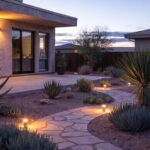
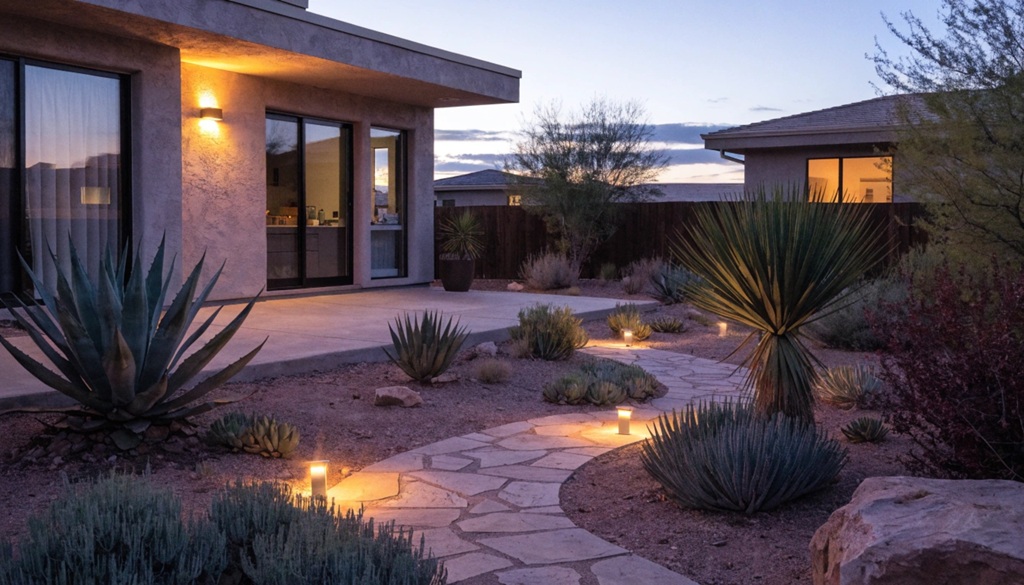
Arizona’s relentless sun is both a challenge and an opportunity. While the intense heat and UV exposure can destroy cheap plastics and batteries within a single summer, the sheer abundance of sunlight means solar lighting can perform exceptionally well here—if you choose wisely. The problem is that most generic buying guides ignore Arizona’s unique climate conditions, leaving homeowners with cracked lenses, dead batteries by July, and lights that barely last a season. This guide focuses on how to find affordable outdoor solar lights in az that survive the heat, actually charge efficiently, and fit a realistic budget without sacrificing durability.
Key Takeaways
- Prioritize lights with lithium iron phosphate (LiFePO4) batteries or high-heat-rated NiMH, as standard lithium-ion cells degrade rapidly in Arizona’s ambient temperatures.
- Look for IP65 or higher waterproof ratings, but pair that with physical protection from direct afternoon sun exposure to prevent plastic lens warping.
- Choose monocrystalline panels with at least 2W output for Arizona conditions, not the cheaper polycrystalline panels that underperform in extreme heat.
- Understand that “affordable” in Arizona means buying fewer, higher-quality units rather than bulk packs that fail within one monsoon season.
- Buy during spring (March–April) to catch pre-summer sales, and always verify heat certifications before purchasing.
Why Arizona Is Different from Other Solar Markets
If you’ve read generic solar lighting advice from coastal or midwestern sources, you need to unlearn some of it. Arizona’s environment introduces three specific pressures that don’t exist elsewhere: extreme ambient heat, intense UV radiation, and monsoon-driven dust storms.
The most overlooked issue is heat, not lack of sunlight. while solar lights in colder states struggle for winter charge, Arizona lights bake in temperatures exceeding 110°F. According to battery chemistry research, every 15°F increase above 77°F cuts a standard battery’s lifespan by roughly half. In practical terms, a standard NiMH battery rated for 500 charge cycles in a temperate climate might only deliver 200 cycles in Phoenix or Tucson before capacity drops significantly. Also, the intense UV index in AZ degrades acrylic and polycarbonate lenses rapidly, turning them brittle and yellow within 8-12 months if they don’t have UV inhibitors.
Heat Ratings: The Spec Most Buyers Miss
Most online product listings mention “waterproof” or “IP65” but rarely mention “operating temperature range.” Look for lights that explicitly state they can operate in temperatures up to 122°F (50°C). If a listing doesn’t provide this spec, that’s a red flag—the manufacturer likely didn’t design for desert conditions. The battery compartment matters most. If the battery is sealed inside a dark plastic housing that absorbs heat, internal temperatures can hit 140°F. You want lights with white or light-colored housings that reflect sunlight and allow heat dissipation.
Battery Chemistry: The Real Cost Driver
Batteries are the reason cheap lights fail in Arizona. The vast majority of budget solar lights (under $20 per unit) ship with either NiCd or generic lithium-ion cells. NiCd batteries have poor high-temperature performance and are being phased out globally due to toxicity. Standard lithium-ion batteries, like those marked 18650, have a maximum charge temperature of about 113°F, which Arizona easily exceeds. When temperatures exceed this range, the internal resistance rises, and the effective charging capacity drops by 30–50%. you end up with lights that turn on at 9 PM and die by 11 PM.
Why LiFePO4 Is Worth the Extra Money in AZ
Lithium Iron Phosphate (LiFePO4) is a battery chemistry that tolerates higher temperatures better than any other consumer-grade option. It has a charge temperature range up to 140°F and a cycle life of typically 2,000–5,000 charges, compared to 300–500 for standard lithium-ion. While LiFePO4 lights cost $5–$15 more upfront per fixture, they often last 3–4 times longer in Arizona conditions. When you do the math, the cost per year of operation is actually lower. Search for affordable outdoor solar lights in az specifically listing “LiFePO4” in the product description. If you can’t find that term, look for “high-temperature rated batteries” or “desert-ready.”
Mastering Heat Efficiency: Selecting Solar Panels for Desert Climates
Not all solar technology handles extreme heat equally. While budget outdoor fixtures typically rely on amorphous or polycrystalline silicon, monocrystalline solar panels offer superior thermal resistance, retaining approximately 15% to 20% more efficiency at elevated temperatures. In the intense heat of an Arizona summer, that performance edge translates directly into 30 to 45 additional minutes of evening illumination, making panel selection critical for long-term reliability. Just as optimizing your home setup requires choosing hardware engineered for extreme environments, staying connected outdoors demands high-performance gear—if you want to track your heat tolerance and outdoor activity with precision, explore our guide to finding the best premium smartwatch in CA.
Panel Size and Wattage: Understanding the Real Requirements
A 2W monocrystalline panel is generally the minimum for a single 300-lumen fixture in AZ. Any panel rated below 1.5W will likely struggle to fully charge a battery that gets hot during the day. Also, consider that Arizona’s dust storms leave a fine layer of red clay dust on panels that can block 20% of sunlight within two weeks. Choose lights with slightly angled panels (15–30 degrees) that shed dust during our rare rain events, and plan to wipe them with a microfiber cloth monthly. Also, avoid recessed panels where debris can collect. Surface-mounted, slightly textured panels are easier to keep clean.
What to Buy in Each Price Tier
Prices in Arizona vary wildly depending on big box stores like Home Depot and online marketplaces. Here’s the realistic breakdown of what you can expect at different price points and what you must sacrifice:
| Price Range (per unit) | Typical Specs | Practical Limitations | Best Use Case in AZ |
|---|---|---|---|
| Under $15 | NiMH batteries, polycrystalline panel, plastic housing | May only last 12-18 months; heat degradation likely; mounting clips often brittle | Temporary lighting for a single summer event, or accent lights where replacement is easy |
| $15–$35 | LiFePO4 or high-temp NiMH, monocrystalline panel, UV-treated ABS housing | Smaller capacity than premium options; may lack smart features | The sweet spot for permanent walkway and accent lighting in AZ climates |
| $36–$60 | Separable panels, IP67 waterproofing, aluminum housing, multi-color modes | Heavier and requires drilling for secure mounting | Security lighting and areas exposed to monsoon wind gusts |
| Over $60 | Commercial-grade, aluminum housings, replaceable battery packs | Overkill for most residential needs | HOA-required uniformity or large industrial properties |
While bulk-packing deals of 8–12 lights for under $30 seem tempting, math shows these rarely cost less in the long term. A single $45 light with a replaceable LiFePO4 battery will likely outlast three $15 lights combined.
Choosing the Right Fixture Type for the Environment
Different fixture types perform differently in Arizona’s microclimates. The term “affordable outdoor solar lights in az” covers several categories, and choosing the wrong one results in performance disappointment.
Path Lights and Stake Lights
These are the most vulnerable to heat because the stakes sit directly on baked soil and make contact with the ground. when soil temperatures exceed 130°F, heat transfers through the metal stake into the battery compartment. For this category, look for models with a horizontal split—the battery should sit high above the soil level, not down near the stake tip. Additionally, during monsoon season, path lights tend to fill with pooled water at the base, so check the seam between the light head and stake—choose models with a screw-in collar, not push-fit friction connectors.
Wall-Mounted Lights and Flood Lights
Wall-mounted lights have one major problem in Arizona: they absorb heat radiated from the east and west-facing walls, which can stay hot until 2 AM during summer. If your wall is darker in color, the radiated heat is much worse. Choose surface-mount fixtures with at least a 1-inch gap between the light housing and the wall for airflow. Avoid models with internal motion sensors that are directly coupled to the LED heatsink, as the sensor electronics are often the first component to fail in its AZ heat. In these fixtures, you should also prioritize aluminum housings over plastic, because aluminum acts as a heatsink that moves heat away from the battery.
String Lights
String lights are a special case. They are flexible, exposed to weather from all angles, and often hang under pergolas or covered patios. The challenge in AZ is not just heat, but ultraviolet-catalyzed plastic failure. The individual sockets on cheap string lights become brittle after one summer, and the exposed wiring insulation shrinks in heat. When buying string lights for AZ, look for sockets made of silicone rubber, not PVC plastic, and check whether the wire is rated for sunlight exposure specifically (look for “UV-stabilized” on the packaging).
Practical Installation and Maintenance Strategies
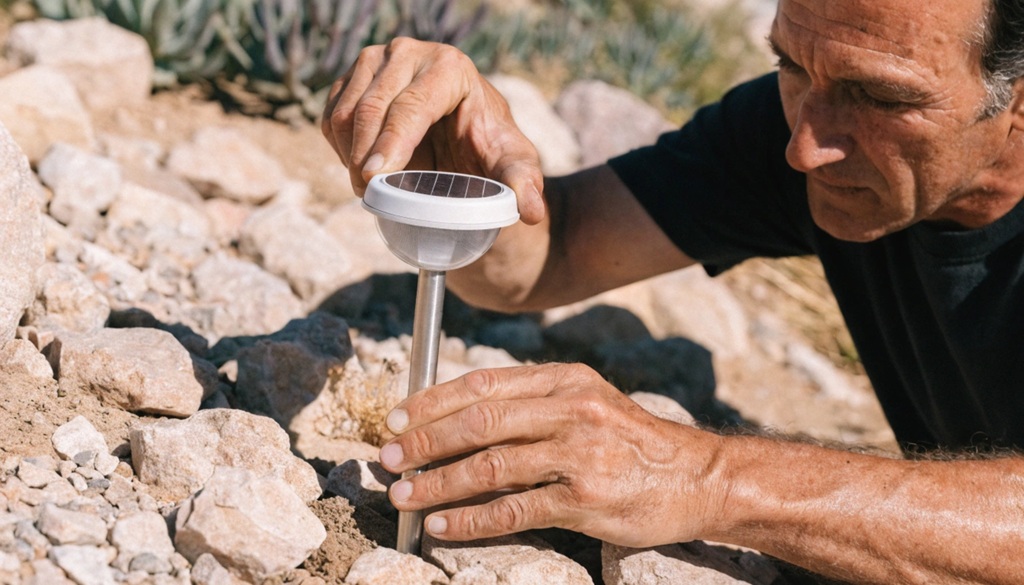
Installation location is the difference between lights that last a decade and those that die in one season. This isn’t just about sun exposure. Angle matters: tilted overhead placement, with a good exposure angle of 45 degrees, charges far better than having lights positioned at ground level.
Strategic Mounting for Heat Avoidance
The single smartest move is to install lights where they receive direct morning sun but are in shade by 2 PM. This is the opposite of the common advice to maximize sun exposure, but it is the best strategy in AZ. The morning sun charges the battery during cooler temperatures (75–85°F), avoiding the midday heat peak. You lose about 15–20% of total sunlight hours, but you gain 30–50% more battery lifespan. For specific installations where this is impossible, install a simple shade fin or aluminum foil backing plate under the panel to deflect some radiated heat. this is a cheap trick that dramatically enhances performance.
Cleaning Cycles
In Arizona, solar panel cleaning is not optional, it is a maintenance requirement. The “haboob” dust storms of June and July will coat panels in silt that effectively halves power output. Create a simple schedule: wipe panels every two weeks from May through September, and monthly during the cooler seasons. Use a damp microfibre cloth with diluted mild soap, never abrasive cleaners which scratch the anti-reflective coating. Do this in the early morning when panels are cool; cleaning hot panels with cold water can cause thermal shock and micro-cracks.
Timing Your Purchase for Maximum Value
Buying solar lights in Arizona during peak season (June) means paying premium prices. Instead, consider the purchasing cycle. Retailers discount solar lighting heavily in March-April to clear winter stock, and again during post-holiday clearance in January. In Arizona, spring purchases are particularly smart because you can install lights before the brutal heat hits, allowing you to observe performance during cooler weather before committing to more units. Additionally, monitor online prices for specific models using price-tracking tools. Prices fluctuate 10–25% throughout the year, and there is no reason to pay full price if you are willing to wait six weeks.
Warranty and Local Store Considerations
Heat-related failures are common enough, and the warranty—not the price tag—should guide your final purchase decision. Most big-box stores in Arizona offer 90-day return policies. A solid manufacturer warranty on solar lights in AZ should cover at least one year for the battery and two years for LEDs. Local solar or home-improvement stores in Phoenix and Tucson often carry “desert-rated” lineup that national chains skip, but these come at a 15–20% premium. If you use a local store, ask if the fixture was tested in chamber at 50°C ambient temperature, this is a question that filters out inferior products.
Frequently Asked Questions
Do solar lights need direct sunlight in Arizona to work?
No, they need 6 or more hours of good sunlight, but in Arizona, morning sun is enough. Direct sunlight from 8 AM to 2 PM is actually better, since during the later afternoon the surface heat of the fixture interferes with the battery charging. If you mount lights on the east side, always face the panel east toward the sunrise rather than overhead, for practical reasons.
Can I leave solar lights out year-round in Arizona?
Yes, but with preparation. You should only leave fixtures out year-round that are rated for high-temperature operation, otherwise, you will need to bring them indoors during June, July, and August. A truly heat-rated light with LiFePO4 batteries and an aluminum housing can stay out year-round, but you must still clean the panels and inspect the seals before monsoon season.
Why do lights that worked in winter die in summer heat?
Winters in Arizona are mild, warm, and perfect for solar batteries. When summer arrives, the elevated battery temperature triggers internal chemical reactions that cause leakage resistance and gas generation in standard cells. This in turn reduces amp-hour capacity. To solve it, replace the battery with a LiFePO4 cell, or simply buy lights with a separate battery compartment mounted away from the heat source.
Are cheaper lights from mass-market stores or online marketplaces worth it?
Usually not for Arizona residential use. It is common that inexpensive bulk lights (under $10 per unit) have thin-gauge wiring that sags in heat and soldered joints that crack when thermal expansion occurs. This makes them lifespan of one season. You are better off buying fewer, mid-range items.
What is the ideal mounting height for solar floodlights in AZ?
Mount floodlights at 8 to 10 feet high. This places the unit above most, this placement avoids most debris splash-back and provides good coverage angle. But make sure the panel is not angled directly upward; mount it with a slight downward tilt of 15 degrees to avoid debris collection and also to cool down from drifting air.
How do I know if a light will survive the summer?
Check the operating temperature spec in the manual or manufacturer’s website. It needs to work at up to 122°F for at least a few hours. You should also check opening and removing battery casing: a light that has a gasket seal (O-ring) is much better than one that uses flimsy friction-fitting caps, which shrink in heat.
Conclusion
Buying solar lights in Arizona doesn’t have to be a hassle, but failing to plan for the heat is a common mistake. Instead of looking for the absolute cheapest option when seeking affordable outdoor solar lights in az, focus on finding units with heat-tolerant chemistry (LiFePO4), monocrystalline panels, and water/UV-proof housings. Aim to spend 40-60% more upfront for an average of three to four times longer lifespan. During the installation, prioritize morning sun over all-day sun, and mount items off the hot ground. In maintenance, dust your panels every couple of weeks using a damp cloth, and align your purchases with spring clearances. With these steps, your solar lights will stay bright through the summer heat, tricky monsoon, and the bright winter sun for many useful seasons. Don’t just buy the cheapest option—buy the cheapest per year, and you will end up with a well-lit, reliable yard all year long.