

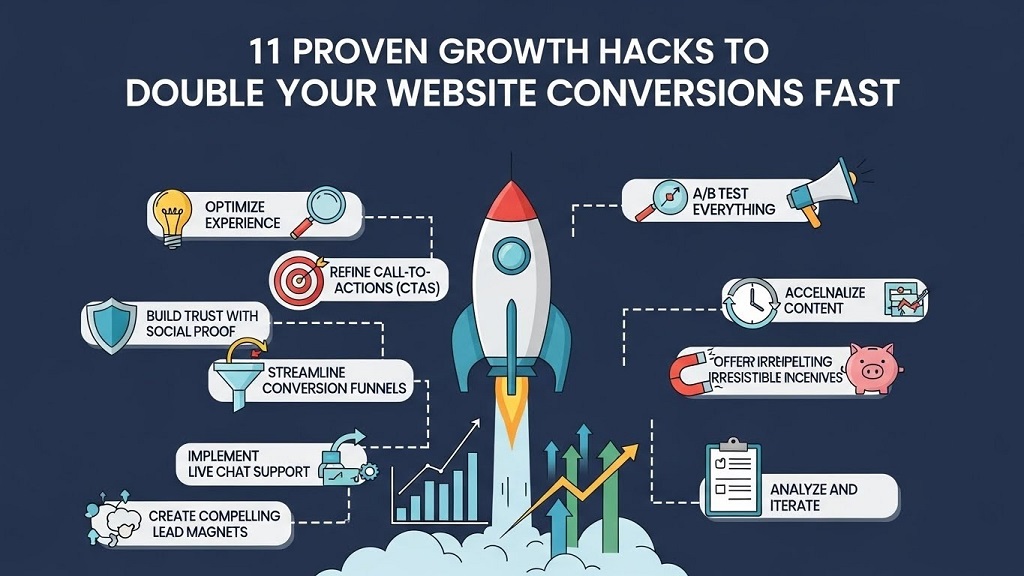
Your website gets thousands of visitors every month, but somehow, sales remain stagnant. Sound familiar? You’re not alone. Most businesses struggle with the same frustrating reality: traffic doesn’t automatically equal revenue. The difference between a website that converts and one that doesn’t often comes down to strategic optimization. The good news? You don’t need a complete redesign or massive budget to see dramatic improvements. These 11 growth hacks to double conversions will transform your website into a conversion machine, turning casual browsers into paying customers faster than you ever thought possible.
Understanding the Foundation of Website Conversions
Before diving into specific website conversion hacks, let’s establish what conversion optimization really means. A conversion happens whenever a visitor completes a desired action on your site—whether that’s making a purchase, signing up for a newsletter, downloading a resource, or filling out a contact form. The average website conversion rate hovers around 2-3%, which means 97-98% of your visitors leave without taking action. Even small improvements can generate significant revenue increases without spending more on advertising.
Psychological Triggers That Increase Website Conversions
Leverage Social Proof Strategically
Nothing builds trust faster than seeing that others have made the same decision. Displaying customer testimonials, review counts, case studies, and user-generated content creates powerful social validation. Place testimonials near conversion points—checkout pages, sign-up forms, and product descriptions. Include specific details like names, photos, and companies to enhance authenticity. Websites that effectively showcase social proof typically see conversion increases of 15-30%.
Create Urgency Without Being Manipulative
Genuine scarcity and time-sensitive offers tap into our fear of missing out. Limited-time discounts, countdown timers for special offers, and low-stock notifications encourage immediate action. The key is authenticity—fake urgency damages trust and brand reputation. Use real inventory counts, actual promotion deadlines, and honest communication about availability. This approach to increase website conversions respects your audience while motivating faster decision-making.
Simplify Decision-Making With Clear Value Propositions
Visitors should understand your unique value within seconds of landing on your page. A compelling value proposition answers three questions: What do you offer? Who is it for? Why is it better than alternatives? Place your value proposition prominently above the fold, use clear language that avoids jargon, and highlight the primary benefit rather than features. When prospects immediately grasp how you solve their problem, conversion rates naturally climb.
Technical Optimization Strategies
Accelerate Page Load Speed
Every additional second of load time reduces conversions by approximately 7%. Visitors expect pages to load in under three seconds—anything longer triggers abandonment. Compress images without sacrificing quality, minimize HTTP requests, enable browser caching, and use a content delivery network (CDN) for faster global access. Google’s PageSpeed Insights provides specific recommendations for your site. Speed optimization is among the most impactful website conversion hacks because it affects every visitor equally.
Optimize for Mobile Experience
Mobile devices now account for over 60% of web traffic, yet many sites still prioritize desktop design. Responsive design isn’t enough—you need mobile-first optimization. Ensure buttons are easily tappable, forms are simple to complete on small screens, and checkout processes require minimal typing. Test your site on actual devices, not just browser simulators. Mobile optimization alone can increase conversions by 20-40% depending on your current mobile experience.
Implement Strategic Exit-Intent Popups
Before dismissing popups as annoying, consider this: well-designed exit-intent popups can recover 10-15% of abandoning visitors. These popups appear only when a user’s cursor moves toward the browser’s close button, offering a last-chance incentive to stay engaged. Offer a compelling discount, free shipping, or valuable content in exchange for an email address. Keep the design clean, the offer clear, and always provide an easy way to dismiss the popup.
Conversion-Focused Design Elements
Design High-Converting Call-to-Action Buttons
Your CTA buttons are gatekeepers to conversions. Use action-oriented text that tells visitors exactly what happens next—”Get My Free Guide” outperforms generic “Submit” buttons. Choose contrasting colors that stand out from your page design without clashing. Make buttons large enough to be easily clickable but proportionate to surrounding elements. A/B test different colors, copy, and placement to discover what resonates with your specific audience.
Reduce Form Friction
Every form field you add decreases completion rates. Audit your forms ruthlessly and eliminate anything that isn’t absolutely necessary. Use smart defaults, autofill capabilities, and inline validation that provides immediate feedback. For longer forms, implement a progress indicator so users know how much remains. Multi-step forms with clear progression often outperform single-page forms because they feel less overwhelming, even when collecting the same information.
Add Live Chat Support
Modern consumers expect instant answers to their questions. Implementing live chat support removes barriers to conversion by addressing concerns in real-time. Even a simple chatbot that answers frequently asked questions can improve conversions by 20% or more. Position chat widgets prominently on product pages, pricing pages, and checkout flows. Train your team to respond quickly and helpfully, turning questions into conversions rather than lost opportunities.
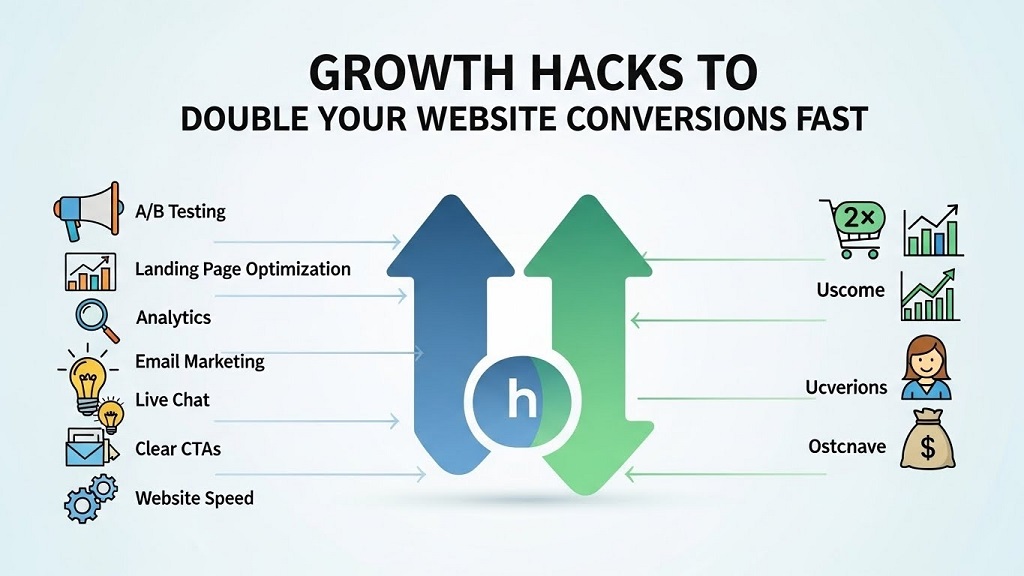
Content and Trust-Building Tactics
Showcase Security and Trust Badges
Online shoppers worry about payment security and data privacy. Displaying trust badges from recognized security providers, payment processors, and industry organizations significantly reduces purchase anxiety. Place security seals near payment forms, highlight SSL certification, and clearly communicate your privacy policy. These visual trust indicators work subconsciously to reassure visitors that their information is safe.
Use Video to Demonstrate Value
Product videos increase conversions by up to 80% on landing pages. Video allows you to demonstrate functionality, explain complex benefits, and connect emotionally with prospects in ways that text and images cannot. Keep videos short and focused—30 to 90 seconds for product demos, longer for educational content. Include captions for accessibility and for viewers watching without sound. Video content addresses multiple learning styles and accelerates the path to conversion.
Measuring and Optimizing Your Results
Implementing these growth hacks to double conversions is just the beginning. Successful optimization requires continuous testing and refinement. Use analytics tools to track conversion rates across different pages, traffic sources, and device types. Set up conversion funnels to identify where visitors drop off. Run A/B tests to compare variations of headlines, images, CTAs, and layouts. Small improvements compound over time—a 10% increase in conversion rate might seem modest, but it represents 10% more revenue without increasing your marketing spend.
Conclusion: Your Roadmap to Doubling Conversions
Doubling your website conversions isn’t about implementing one magic trick—it’s about systematically removing friction, building trust, and guiding visitors toward action. Start by focusing on the hacks that address your biggest weaknesses. If your site loads slowly, prioritize speed optimization. visitors abandon at checkout, simplify your forms. bounce rates are high, work on your value proposition and initial engagement.
The beauty of these website conversion hacks is that they’re immediately actionable. You don’t need to wait for a complete website overhaul or a bigger budget. Pick three strategies from this list, implement them this week, and measure the results. Then move on to the next three. Consistent, data-driven optimization will transform your conversion rates and your bottom line.
Ready to increase website conversions starting today? Choose one strategy from this article and implement it within the next 48 hours. Your future customers—and your revenue—are waiting.
Frequently Asked Questions
What is a good website conversion rate?
A good conversion rate varies by industry, but generally falls between 2-5% for e-commerce sites and 5-10% for B2B lead generation. Focus on improving your own baseline rather than comparing directly to competitors, as factors like traffic source, product price, and sales cycle significantly impact conversion rates.
How quickly can I expect to see results from these conversion hacks?
Some changes, like improving page load speed or adding social proof, can show immediate results within days. Other strategies, like comprehensive A/B testing or building up substantial video content, may take weeks or months to fully impact conversions. Start with quick wins to build momentum.
Do I need expensive tools to implement these growth hacks?
No. While advanced analytics and testing platforms help, many strategies require only your existing website platform. Free tools like Google Analytics, Google PageSpeed Insights, and free trials of heatmap software provide substantial capabilities without investment. Start with free resources and upgrade as you prove ROI.
Should I implement all 11 hacks at once?
Absolutely not. Implement changes systematically so you can measure the impact of each adjustment. Start with the areas causing the most friction in your current conversion funnel. Once you’ve optimized one area and measured results, move to the next priority.
How do I know which growth hack will work best for my website?
Data should guide your decisions. Use analytics to identify where visitors drop off, conduct user testing to understand pain points, and survey customers about their experience. Start with fixes that address the most significant barriers in your specific conversion funnel rather than following a one-size-fits-all approach.
Related Topics: Instagram Explore Secrets: Reach Thousands More in 2025
Related Topics: How to Check a Canon AE-1 Battery: Simple LED Test for Reliable Shooting