

Checking the battery on a Canon AE-1 is fast, easy, and essential if you want every frame of your film to expose correctly. With one simple LED and meter test, you can tell if your battery is strong enough for reliable shooting or if it is time to swap it before you miss a shot.
What the Canon AE-1 Battery Actually Does
The Canon AE-1 relies on a single 6V battery to power the shutter, light meter, and electronics, so a weak cell can cause exposure errors, inconsistent shutter speeds, or a dead camera. Without enough voltage, the camera may refuse to fire, the meter may behave erratically, or the LEDs in the viewfinder may fail to light.
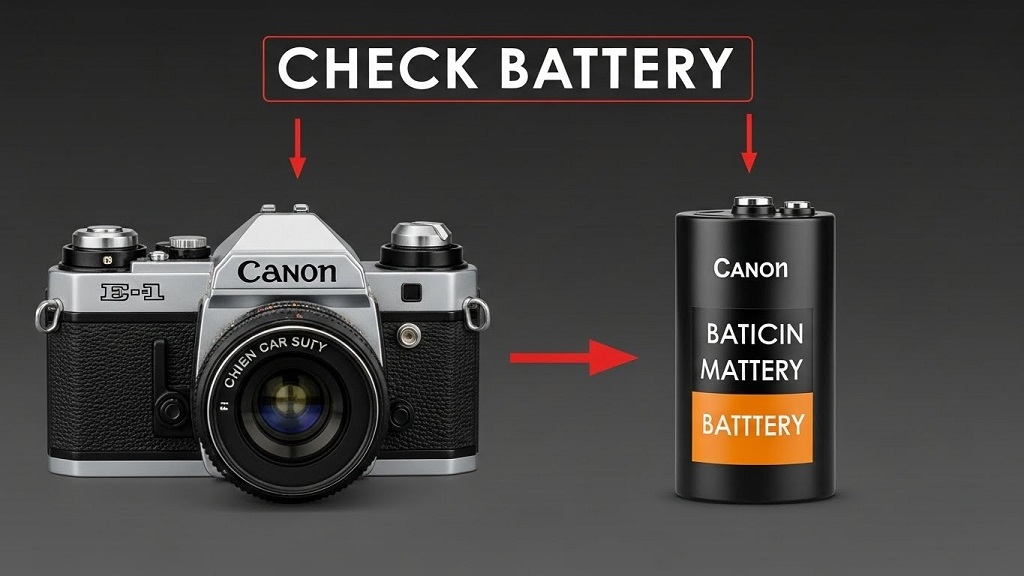
Most AE-1 bodies take a 4SR44/4LR44-style 6V battery (often sold as PX28, V28PXL, 4SR44, or similar), and using the correct voltage is critical to avoid damaging the camera. Many users prefer silver-oxide versions (4SR44) over alkaline because they hold a more stable voltage and are less prone to sudden drops and leakage.
Why a Battery Check Matters Before You Shoot
Running a quick Canon AE-1 battery check before a shoot prevents wasted rolls of film and out-of-focus or underexposed images. Because the AE-1 is electronically controlled, even slight battery weakness can show up as inaccurate meter readings long before the camera completely dies.
Doing a simple LED or meter test at home whenever you load a new battery helps you catch issues early and build a habit of checking power as part of your shooting workflow. This is especially important if the camera has been in storage or you are using older stock batteries that may have self-discharged.
Canon AE-1 Battery Test Button: What It Does
On many Canon A-series cameras, including the AE-1 Program and related models, there is a dedicated battery test button that triggers an audible beep pattern. When you press this button with the camera switched on, the camera uses a small circuit to measure battery strength and communicates the result through beeps or through the viewfinder meter.
The Canon AE-1’s battery check is closely related: it uses a button on the top plate and the meter needle or LED indicators in the viewfinder to show whether your battery is good, weak, or near empty. Understanding how that response should look or sound is the key to interpreting your canon ae-1 battery check correctly.
How to Check a Canon AE-1 Battery (Step-by-Step)
Use this simple routine whenever you install a new battery or before an important shoot if you want a reliable canon ae-1 battery check.
-
Confirm the correct battery type
-
Use a 6V battery labeled 4SR44, 4LR44, PX28, V28PXL, or an equivalent designed for cameras.
-
Avoid 3V or 12V cells of similar size, as they can damage the electronics or fail to power the camera properly.
-
-
Insert the battery carefully
-
Open the battery compartment on the bottom or front of the camera (depending on version) and align the contacts as indicated in the diagram or markings.
-
Ensure the door closes fully and latches, because a partially closed compartment can interrupt power even if the cell itself is good.
-
-
Turn the camera power on
-
Set the main switch to the active position (often marked “A” on related A-series models) so that the meter and electronics receive power.
-
Advance the film lever slightly if required to activate the metering circuit; some AE-1 bodies require this half-cocked position for the meter to wake up.
-
-
Press the canon ae-1 battery test button
-
Locate the small black button on the top plate labeled for battery check and press and hold it for a couple of seconds.
-
While holding the button, watch the meter needle or LED display inside the viewfinder, as this is where the camera reports battery strength.
-
-
Read the meter needle or LED
-
In many teaching guides, the battery is considered good when the needle rests below a specific index mark (often around the 5.6 area on the scale), indicating sufficient voltage.
-
If the needle rises well above that index or behaves erratically, it points to a weak or failing battery that may cause shutter or meter problems.
-
-
Interpret the beeps (if equipped)
-
On the AE-1 Program and similar models, a rapid series of beeps—around six or more per second—usually indicates a strong battery.
-
Much slower beeping, or only a couple of beeps per second, suggests that the battery is near the end of its life and should be replaced before serious use.
-
Following this “how to check canon ae-1 battery” routine takes less than a minute, and it gives immediate feedback on testing ae-1 battery strength before you head out.
Testing AE-1 Battery Strength in Real-World Use
A single battery check is helpful, but paying attention to how the camera behaves in the field gives another layer of confidence in your canon ae-1 battery check. Weak batteries can sometimes pass a quick test, then sag under load during long shooting sessions.
Watch for these practical signs when testing ae-1 battery strength during real shooting:
-
The viewfinder LEDs or meter dim, flicker, or lag when half-pressing the shutter.
-
The shutter occasionally refuses to fire or seems inconsistent at higher speeds.
-
The meter readings drift unexpectedly from frame to frame under similar lighting, suggesting unstable voltage.
If you see any of these issues, repeat the canon ae-1 battery test button check and consider replacing the battery even if it still appears marginally acceptable.
Best Practices for Reliable Battery Performance
Getting the most from your AE-1 battery is not just about checking it, but also about choosing the right chemistry and storing the camera correctly.
-
Choose silver oxide when possible
Silver-oxide batteries (4SR44) typically hold a steadier voltage through most of their life compared with alkaline (4LR44), which can drop more gradually and unpredictably. This makes metering more consistent and reduces surprises during long rolls of film. -
Avoid leaving batteries in unused cameras
Even high-quality cells can leak if left for long periods, especially in warm, humid conditions, and this leakage can corrode contacts and circuit boards. Removing the battery when storing the camera for months is a simple way to protect the AE-1’s electronics. -
Inspect battery contacts regularly
Dirty or oxidized contacts can mimic a weak battery by blocking current flow, so wipe them gently with a clean, dry cloth or a small swab if you see discoloration. If corrosion is heavy, professional cleaning may be needed to restore reliable operation.
Building these habits into your workflow means your canon ae-1 battery check becomes just one part of a broader reliability routine.
Troubleshooting a Failed Canon AE-1 Battery Check
Sometimes the canon ae-1 battery test button gives an unexpected reading: maybe the needle barely moves, the beeps are erratic, or nothing happens at all. When that occurs, work through these common issues in order.
-
Verify the battery is truly fresh
-
Even new batteries can be old stock, so check expiry dates and consider trying a second, known-good cell.
-
If a replacement instantly fixes the issue, the original cell was likely defective or too depleted.
-
-
Check correct orientation and seating
-
Re-open the compartment and confirm that the polarity matches the markings; reversed batteries will not power the camera or the test circuit.
-
Make sure the door closes firmly, as a loose latch can intermittently disconnect power.
-
-
Test if the rest of the camera responds
-
Try half-pressing the shutter to see if the meter reacts or if any LEDs appear, even if the canon ae-1 battery check seems off.
-
If nothing at all powers up, the issue may be in the power switch, internal wiring, or a blown component.
-
-
Suspect the battery check button itself
-
Some users report that the test button can fail or stick while the meter and shutter still work normally, giving false “dead battery” impressions.
-
If normal metering and firing behave correctly in real use, but the test button seems unreliable, the fault may be localized to that switch.
-
If none of these steps restore proper readings, professional inspection is recommended, because the AE-1 uses an internal check circuit that will lock out shutter operation when voltage falls too low or when key magnets fail.
FAQs: Canon AE-1 Battery Check
Q1. How often should I perform a canon ae-1 battery check?
It is wise to test the battery whenever you load a new roll, after long storage, or any time the meter or LEDs start behaving unpredictably. Regular checks prevent wasted film and make sure the shutter and exposure system are powered correctly.
Q2. What battery does the Canon AE-1 use?
The AE-1 is designed for a 6V battery usually labeled 4SR44, 4LR44, PX28, or V28PXL, sold under various brand names. Always ensure the battery is 6V, as similar-sized cells with 3V or 12V ratings are not suitable.
Q3. Is the canon ae-1 battery test button accurate enough to trust?
The built-in test is designed to show when voltage drops below the safe level for consistent operation, and it is generally reliable if the camera is in good condition. However, combining it with real-world observation of meter and shutter behavior gives the best picture of testing ae-1 battery strength.
Q4. My meter needle goes too high when I press the battery check—what does that mean?
Some guides note that as the battery weakens, the needle reading can climb above certain index marks, which indicates declining voltage. In this case, replacing the battery before your next serious shoot is recommended to avoid mis-exposure.
Q5. Can I use rechargeable batteries in a Canon AE-1?
Rechargeable options exist but often differ in voltage and discharge characteristics, which can affect metering accuracy and runtime. For most users, a quality silver-oxide 4SR44 or equivalent 6V photo battery is the safest and most predictable choice.
Conclusion
Before your next roll of film, grab a fresh 6V cell and walk through this simple canon ae-1 battery check using the LED or meter test so your AE-1 is ready for every frame. If you found this guide useful, share it with other film shooters and bookmark it so you can quickly revisit the canon ae-1 battery test button steps whenever you need to test battery strength again.