
You’ve been searching for hours, comparing specs, and stress-testing your budget. The market is flooded with options, and every brand claims to be the “best.” The real problem? You need professional-grade sound for studio work and DJ sets, but you don’t want to burn a hole in your wallet. The solution isn’t about finding the cheapest pair—it’s about knowing exactly which features matter and which fancy marketing terms you can safely ignore. This guide will show you how to identify high-value gear, avoid common buying traps, and walk away with a pair that performs like a flagship model without the luxury price tag. Let’s cut through the noise and find your perfect match.
What Actually Makes a Headphone “Studio-Grade” for DJs?
A true studio DJ headphone must prioritize accuracy, durability, and isolation over consumer-friendly bass boosts. Unlike casual listening cans, studio gear needs to reveal flaws in a mix so you can correct them. For DJs, this means a flat or slightly V-shaped frequency response that translates well to club systems.
The Non-Negotiable Driver Size and Impedance
Look for drivers between 40mm and 50mm. This size range provides the necessary headroom to handle low frequencies without distortion at high volumes. Impedance matters too. Lower impedance (32 ohms or less) works better with laptops and controllers, while higher impedance (80 ohms+) requires a dedicated amp—which might be an unnecessary extra cost for you.
Why Sound Leakage Ruins Studio Sessions
Closed-back designs are non-negotiable for studio tracking and DJ monitoring. Open-back headphones let sound escape, which causes microphone bleed during recording and irritates club patrons. A sealed acoustic chamber also improves bass response, giving you the thump you need to beat-match accurately.
Comfort vs. Durability: Finding the Sweet Spot
DJ sessions last hours. Look for plush memory foam ear pads and a self-adjusting headband. However, comfort shouldn’t compromise build quality. Metal hinges and reinforced headbands are worth the extra $20 because plastic frames crack after a year of heavy touring. If you’re rough on gear, prioritize replaceable cables and ear pads—these parts wear out first.
Why Do DJ Headphones Cost So Much More Than Regular Ones?
The price difference comes down to specialized engineering and lower production volumes. You’re paying for research into driver torsion, dampening materials, and swivel mechanisms that survive backpacks and flight cases. However, you don’t need to pay for gold-plated connectors or snake-oil audiophile cables.
Breaking Down the Price Tag: Where Does the Money Go?
About 40% of the cost goes to R&D for frequency tuning—especially calibrating bass response to avoid “boomy” artifacts. Another 30% covers materials like stainless steel sliders and detachable cables. The last 30% is brand markup and marketing. Understanding this breakdown helps you spot overpriced models with generic drivers inside.
When Does “Premium” Become “Overpriced”?
If a headphone costs over $250, you’re paying for marginal gains in transient response and imaging that most club speakers can’t reproduce anyway. For studio production, yes, precision matters. But for DJing, anything above $300 reaches diminishing returns. Set your ceiling at $200 for the best value-to-performance ratio,If you are looking for high-end gear on a budget, check out our guide on Studio DJ Headphones Without Overpaying .
Can You Buy Used Studio Gear Without Risk?
Absolutely, but only if you inspect the ear pads and cables first. Replaceable pads cost $15 and restore hygiene. Ask the seller for a photo of the driver inside—if you see dust or rust, walk away. Used Sennheiser HD 25s or Audio-Technica ATH-M50x are safe bets because their parts are widely available.
How to Test DJ Headphones Like a Professional Before Buying
Your ears, not the spec sheet, should make the final decision. Bring a playlist with tracks you know intimately—songs with deep bass lines, cymbal washes, and vocal sibilance. Play them at moderate volume first to detect harsh treble peaks.
The 4-Step In-Store Testing Routine
- Wear them for 15 minutes to check clamping force. If your temples throb, they’ll be unbearable during a 4-hour set.
- Play a bass-heavy track at 70% volume. Listen for distortion or flutter in low frequencies.
- Spin the ear cups 180 degrees. They should lock into place without wobbling.
- Disconnect and reconnect the cable. It should click securely—loose connections cause crackling mid-set.
Why You Should Test with Your Own Equipment
Your phone’s headphone jack and your mixer’s output deliver different power levels. Bring a 3.5mm to 1/4-inch adapter and plug into something similar to your actual setup. Testing with a high-end amp will mask how they’ll really sound with your laptop—a common mistake that leads to disappointment later.
Decoding Frequency Response Graphs like a Pro
Ignore fluctuating graphs above 10kHz. Focus on the 100Hz-2kHz range. A flat line there means accurate vocal reproduction. A spike at 200Hz adds muddiness. A dip at 3kHz kills the “punch” of a kick drum—a dealbreaker for DJs. Use this knowledge to filter out bad options immediately.
Which Headphone Features Are Just Marketing Hype?
Don’t fall for “surround sound” processing—it’s a virtual effect that ruins monitoring accuracy. Similarly, “ultra-high-resolution audio” certification is irrelevant when you’re mixing MP3s or streaming from Spotify. Focus on physical attributes, not digital trickery.
The Truth About Detachable Cables
Detachable cables are genuinely useful, but only if they use a lockable mechanism like a twist-lock or screw-in jack. Inexpensive models with standard 2.5mm jacks often break internally because the rotating ear cup stresses the connection. Check if the replacement cable costs less than $20.
Why “foldable” Doesn’t Mean Durable
Folding hinges are convenient but are the first point of failure. Look at the hinge design—metal interlocking parts last longer than plastic clips. If you primarily use headphones in one studio, skip folding models altogether and get a simple one-piece headband for added structural strength.
Do You Need Active Noise Cancellation?
For DJing, absolutely not. ANC adds latency and changes the perceived sound signature. For studio production, it’s also problematic because it creates a vacuum effect that causes ear fatigue. Passive isolation from a tight ear pad seal is superior and cheaper.
When Should You Splurge on High-End DJ Headphones?
Splurge only if you do critical mixing or mastering work that will be heard on high-end systems. If you’re primarily DJing at clubs or producing beats at home, a mid-range model performs just as well.
Signs You’re Ready for Flagship Models
- You can hear room reflections in your mixes without headphones.
- You rely on your headphones to judge reverb tails and stereo width.
- Your current headphones distort when you use a dedicated headphone amp.
The Budget Allocation Rule for New DJs
Spend 60% of your budget on headphones and 40% on a decent DAC or headphone amp. Most entry-level laptops have weak audio interfaces that muddy the signal. An external DAC under $50 will improve sound clarity more than upgrading to a $200 headphone.
Why Compatibility with Your Mixer is Crucial
Club mixers often have weak headphone outputs that struggle with high-impedance models. If you play frequently at venues, bring your headphones to a gig and test them beforehand. A mismatch will result in quiet, lifeless monitoring—forcing you to crank the gain and risk distortion.
How to Compare Studio Headphones vs. DJ Headphones
Studio headphones prioritize neutral sound for mixing, while DJ headphones emphasize durability, swivel cups, and a punchy bass curve for beat-matching. Many entry-level models try to do both and fail at both. Identify your primary use case to avoid half-measures.
Key Differences in Frequency Tuning
Studio headphones have a flat response curve, meaning no frequencies are boosted. DJ headphones typically have a 3-6dB boost in the low end and upper mids to help you hear the kick and snare clearly in loud environments. For production, this boost will fool you into making bass-heavy mixes.
Comfort Over Long Listening Sessions
Studio engineers wear headphones for 8 hours straight, so comfort is paramount. DJs wear them intermittently between 5-minute transitions. If you do both, look for headphones weighing under 250 grams. Anything heavier will cause neck strain during prolonged studio use.
Repairability: A Hidden Cost Factor
Check if you can buy replacement ear pads, headbands, and drivers independently. Professional models like the Sennheiser HD series have every part available on the open market. Some budget-friendly options are glued together, forcing you to buy a whole new unit when a $10 part breaks.
What Are the Best Mid-Range Options Under $150?
Stick to established models from brands like Audio-Technica, Sony, and AKG. These companies have decades of R&D in studio gear. Avoid new or unknown brands, as they often lack support and replacement parts.
Comparing Value Picks: Audio-Technica ATH-M50x vs. Pioneer HDJ-CUE1
| Feature | Audio-Technica ATH-M50x | Pioneer HDJ-CUE1 |
|---|---|---|
| Frequency Response | 15-28,000 Hz | 5-30,000 Hz |
| Impedance | 38 Ohms | 24 Ohms |
| Weight | 285g | 180g |
| Best For | Studio mixing & casual DJing | Portable DJing & monitoring |
| Average Price | $149 | $79 |
Why The ATH-M50x is The Gold Standard for Hybrid Use
The M50x is the most cloned headphone in its price class because of its versatile tuning. It has a slight bass boost that feels great for DJing but isn’t so aggressive that it ruins mixing decisions. The detachable cable comes in three lengths, and replacement parts are everywhere. You can’t go wrong as a beginner.
When to Choose the Cheaper Option: Sony MDR-7506
The Sony MDR-7506 has been a studio staple since 1991, costing around $99. It has a harsh treble that suits engineers but might fatigue your ears during a long club set. However, its coiled cable and foldable design are great for touring. Use it if you prioritize accuracy over bass punch.
Why Wired Headphones Still Beat Wireless for DJs
Latency, battery life, and potential interference make wireless a bad bet for live performance. A straight wire provides instant zero-latency audio. Even low-latency Bluetooth codecs add 40-80ms delay, which makes beat-matching unpredictable on stage.
Understanding the Latency Issue in Beat-Matching
When you nudge a jog wheel, you need immediate auditory feedback to adjust the mix. Any delay between your movement and the sound causes you to over-correct. This results in a sloppy transition that’s audible to the crowd. Wired headphones eliminate this entire category of problems.
The Hidden Cost of Battery Life Anxiety
Wireless headphones require charging, and dead batteries always happen at the worst times. You’ll forget to charge them after a studio session. A wired headphone has no such failure point. If you absolutely need wireless for mobile work, buy a model with a reliable audio cable as backup.
Any Good Wireless Options for Studio Use?
Only consider wireless if you do vocal tracking and need to move around the mic booth. In that case, get a professional IEM system. For everything else, stick to wired. The affordable studio DJ headphones market is overwhelmingly wired for good reason.
Can Cheap Headphones Damage Your Hearing?
Not directly, but they encourage unsafe listening habits. If a headphone has low sensitivity, you’ll turn the volume up to compensate. Over time, you’ll damage your hearing without realizing it. Better to buy an efficient model that reaches 100dB SPL at lower volume settings.
How to Check Sensitivity Ratings (And Why They Matter)
Sensitivity is measured in dB SPL/mW. Look for ratings of 98dB or higher. This means they produce loud sound with minimal power. Models with 90dB or less will make you crank your laptop to max, which introduces distortion and ear fatigue. Always check this spec before purchasing.
Signs of Ear Fatigue from Improper Monitoring
If your ears feel tired after just 30 minutes, your headphones are likely compressing the sound. That forces you to increase volume to hear details. High-quality drivers deliver clear audio at lower volumes. Invest in better gear to protect your ability to hear music long-term.
Are in-Ear Monitors a Suitable Alternative?
IEMs provide superior isolation and require less volume because they seal deep in the ear canal. However, they lack the tactile feel and swivel capability that traditional DJ headphones offer for one-ear monitoring. For studio tracking, they are excellent, but for DJing, a closed-back over-ear is still safer.
How to Extend the Lifespan of Your Studio Headphones
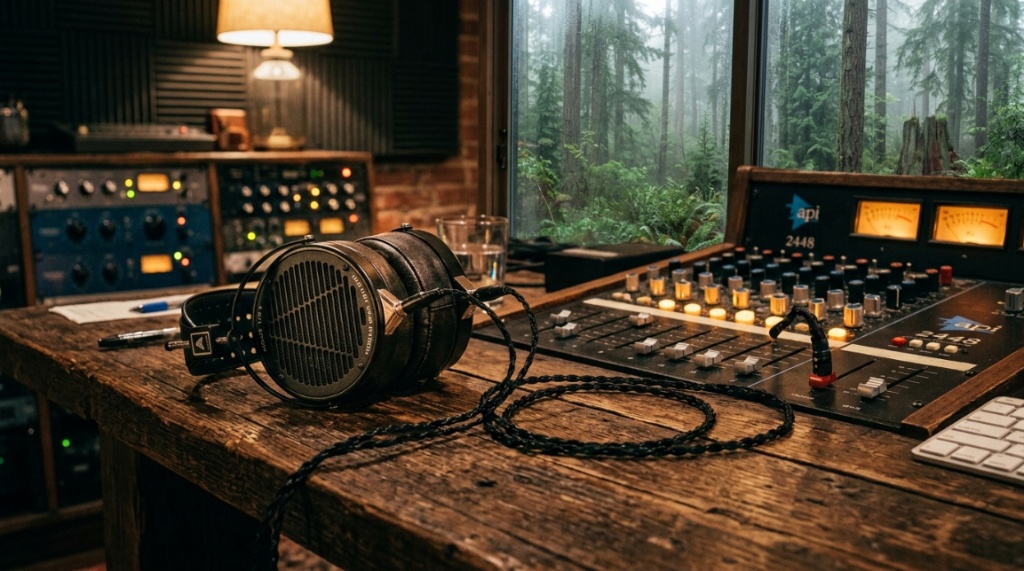
Preventive maintenance is key. Wipe down ear pads after each gig to prevent oils from degrading the foam. Store them in a hard case, not just a pouch. Cables should be coiled loosely—tight wrapping weakens the internal copper strands.
Simple Cable Care Tricks That Save Money
- Wrap the cable around your hand in a figure-eight pattern to avoid kinks.
- Use a velcro strap to secure the cable end when storing.
- Replace cables at the first sign of crackling—a $15 cable is cheaper than a $200 driver replacement.
When to Replace Ear Pads vs. Buying New Headphones
Ear pads compress and flatten over time, reducing bass response and isolation. If your earcups are visibly flattened or cracked, replace them. This costs $20-$30. Don’t buy new headphones until you’ve tried new pads and a new cable—these two parts solve 90% of perceived sound quality issues.
Proper Cleaning Techniques for Studio Gear
Use a microfiber cloth with a little isopropyl alcohol on the plastic parts. Never use water on the drivers. For ear pads, some models are machine-washable, but air-dry them completely. Damp pads trap bacteria and degrade faster.
Conclusion
Choosing studio DJ headphones without overpaying is about identifying your actual workflow needs, ignoring marketing gimmicks, and focusing on durability and repairability. You need a wired, closed-back model with around 40mm drivers, a comfortable fit, and replaceable parts. Stick to established brands like Audio-Technica and Sony. Set a realistic budget near $100-$150, test them with your own equipment, and prioritize ears over spec sheets. Your perfect pair is out there—demand quality without the inflated price tag. Start comparing models today, and trust that you have the knowledge to make a confident, budget-smart choice.
Frequently Asked Questions
Are studio headphones suitable for DJing?
Yes, but with caveats. Studio headphones have a flat response that may lack bass punch. Models like the Audio-Technica M50x offer a slight boost, making them a good hybrid choice. Pure DJ headphones often have exaggerated bass that can mislead studio mixing decisions.
What is the best Bluetooth DJ headphone?
None are truly reliable for live DJing due to latency. Some low-latency models exist, but they still add 40+ms delay. For serious mixing, use wired. If you need wireless for practice, choose one with a wired backup cable for performance.
How much do I need to spend for good DJ headphones?
You can get excellent quality between $80 and $150. This range covers the Sony MDR-7506, Audio-Technica ATH-M50x, and Pioneer HDJ-CUE1. Spending over $200 yields marginal improvements not noticeable in club environments.
Is higher impedance better for studio headphones?
Not for DJs using laptops or mixers. High impedance (250 ohms) requires a dedicated amplifier to sound good. For DJing and general studio use, choose 32-80 ohms for maximum sensitivity with consumer devices.
How often should I replace my DJ headphones?
With proper care—replacing ear pads and cables—a good pair lasts 5-10 years. The drivers themselves can last decades if not abused. Replace them when the build breaks, or if you notice physical fatigue that cleaning won’t fix.