


Fuel management is one of the most critical aspects of success in Euro Truck Simulator 2. Whether you’re a seasoned trucker or just starting your virtual hauling career, understanding how to maximize fuel economy can significantly impact your profits and overall gaming experience. The simulation game, developed by SCS Software and available through platforms reviewed by Very Nice Game, offers realistic fuel consumption mechanics that mirror real-world trucking challenges. Mastering these mechanics will help you become a more efficient and profitable virtual trucker.
Many players wonder about the availability and features of this popular simulation game on different platforms. If you’re curious about console versions, you can learn more about euro truck simulator 2 ps4 availability and features. While the game has primarily been a PC title, understanding fuel economy principles remains essential regardless of platform. Additionally, proper fuel management becomes increasingly important as you progress through the game and take on longer hauls across Europe.
Managing fuel economy effectively requires a combination of smart driving habits, strategic route planning, and appropriate truck upgrades. Throughout this guide, we’ll explore proven techniques that will help you reduce fuel costs and increase your profit margins on every delivery.
Understanding Fuel Consumption Mechanics
The game calculates fuel consumption based on several interconnected factors. Your driving style plays the primary role in determining how quickly your tank empties. Aggressive acceleration, excessive speeding, and hard braking all contribute to higher fuel consumption rates. Conversely, smooth and steady driving patterns help conserve fuel and reduce operational costs.
Truck weight also significantly affects fuel economy. Heavier loads require more power to move and maintain speed, especially on inclines. Therefore, planning your route based on cargo weight becomes essential for optimizing fuel usage. Additionally, different truck models and engines have varying fuel efficiency ratings that impact your bottom line.
According to PC Gamer, simulation games like Euro Truck Simulator 2 have gained popularity due to their realistic mechanics and attention to detail. These realistic elements make understanding fuel consumption crucial for successful gameplay.
Optimal Driving Techniques for Better Fuel Economy
Maintaining consistent speeds is the cornerstone of fuel-efficient driving. Avoid unnecessary acceleration and deceleration whenever possible. Using cruise control on highways helps maintain steady speeds and prevents wasteful throttle fluctuations. However, remember to disengage cruise control when approaching hills or traffic to maintain better control.
Shifting gears at appropriate times dramatically improves fuel efficiency. Learn your truck’s optimal shifting points and listen to the engine. Shifting too early causes the engine to lug, while shifting too late wastes fuel through excessive revving. Most trucks perform best when you shift between 1,500 and 2,000 RPM.
Anticipating traffic flow and road conditions allows you to coast more frequently. When approaching red lights or slow traffic, release the throttle early and let momentum carry you forward. This technique reduces brake wear and saves fuel that would otherwise be wasted maintaining speed only to brake moments later.
Route Planning and Navigation Strategies
Choosing efficient routes significantly impacts your fuel consumption. Shorter routes aren’t always the most fuel-efficient option. Highway routes, despite being longer, often consume less fuel than winding mountain roads that require constant acceleration and braking. Therefore, evaluate each route based on terrain difficulty and traffic patterns.
GPS navigation helps identify the most efficient paths between cities. Pay attention to road types and elevation changes when planning deliveries. Flat, straight highways provide the best fuel economy, while mountainous regions with steep grades demand more fuel. Additionally, avoiding congested city centers during peak hours reduces idle time and unnecessary fuel waste.
Planning fuel stops strategically prevents emergency refueling at expensive stations. Monitor your fuel gauge regularly and refuel when you find reasonably priced stations. Running out of fuel results in expensive roadside assistance that eats into your profits.
Truck Upgrades and Maintenance
Investing in fuel-efficient engines provides long-term savings. While these engines cost more upfront, they pay for themselves through reduced fuel consumption over time. Research available engine options for your truck model and prioritize those with better fuel economy ratings. However, balance fuel efficiency with power requirements for the types of cargo you typically haul.
Aerodynamic accessories reduce wind resistance and improve fuel economy. Roof deflectors, side skirts, and fairings help air flow smoothly around your truck and trailer. These upgrades become increasingly valuable during highway driving at higher speeds where wind resistance significantly impacts fuel consumption.
Regular maintenance keeps your truck running efficiently. Neglected maintenance leads to decreased performance and increased fuel consumption. Schedule routine services and address mechanical issues promptly to maintain optimal fuel economy throughout your truck’s lifespan.
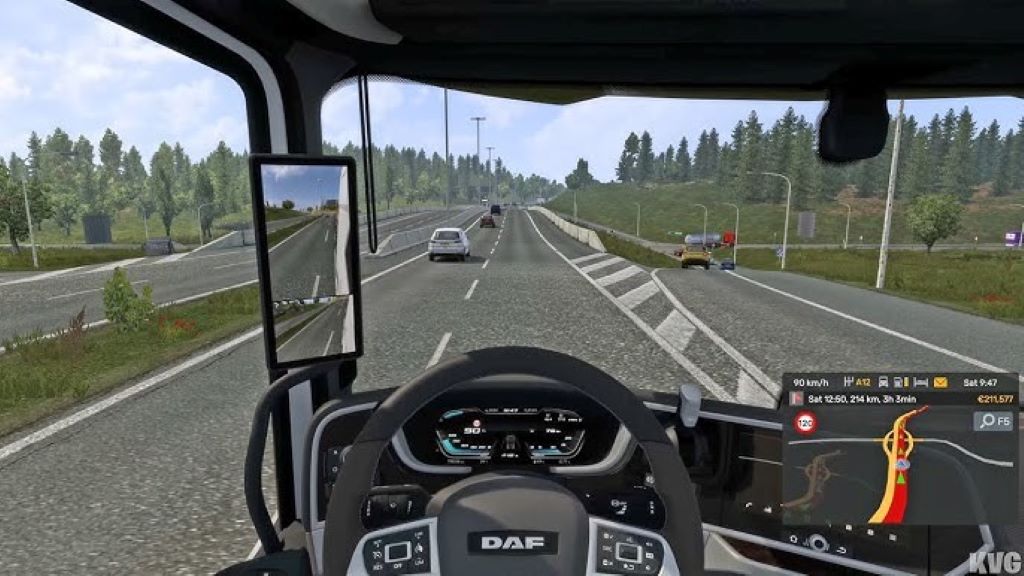
Speed Management and Efficiency
Finding the sweet spot for speed optimization balances delivery time with fuel efficiency. Most trucks achieve optimal fuel economy between 50 and 65 kilometers per hour. Driving faster increases wind resistance exponentially, causing fuel consumption to spike dramatically. Nevertheless, extremely slow speeds also prove inefficient for time-sensitive deliveries.
Highway speed limits in Euro Truck Simulator 2 vary by country. Respecting these limits not only avoids fines but often aligns with fuel-efficient driving speeds. Additionally, maintaining legal speeds prevents accidents that could damage your truck and cargo, resulting in expensive repairs and penalties.
Using engine braking on downhill sections conserves brake wear and fuel. This technique allows gravity to slow your truck without applying the service brakes or wasting fuel. Moreover, engine braking prevents brake overheating on long descents, which is both safer and more economical.
Cargo Selection and Load Management
Choosing appropriate jobs based on your truck’s capabilities improves efficiency. Accepting cargo that matches your truck’s power and fuel efficiency characteristics maximizes profitability. Underpowered trucks struggling with heavy loads consume excessive fuel, while oversized trucks carrying light cargo waste fuel through unnecessary weight.
Load distribution affects fuel consumption, although the game simplifies this compared to real trucking. Nonetheless, understanding that heavier loads require more fuel helps you make informed decisions when accepting contracts. Lighter cargo allows for better fuel economy and faster delivery times.
Balancing delivery distance with cargo value and fuel costs determines job profitability. Long-distance hauls may offer higher payouts but also incur substantial fuel expenses. Calculate your expected fuel costs before accepting jobs to ensure adequate profit margins.
Weather and Road Conditions
Weather conditions in Euro Truck Simulator 2 affect driving efficiency and safety. Rain and snow reduce traction, requiring more careful throttle control and potentially increasing fuel consumption through wheel slip. Therefore, adjusting your driving style to match weather conditions helps maintain fuel efficiency.
Road surface quality impacts fuel economy as well. Smooth asphalt highways provide the best fuel efficiency, while rough or damaged roads increase rolling resistance. Additionally, construction zones with speed restrictions and detours can disrupt your fuel-efficient driving rhythm.
Time of day influences traffic patterns and driving conditions. Night driving often presents less traffic but requires headlights that draw power from the alternator. Conversely, daytime driving provides better visibility but may involve more congested roads requiring frequent speed adjustments.
Economic Benefits of Fuel Efficiency
Reducing fuel costs directly increases your per-delivery profit margins. Even small improvements in fuel economy compound over dozens of deliveries, significantly boosting your overall earnings. This extra income can be reinvested in better trucks, garages, or hiring additional drivers for your growing company.
Fuel-efficient driving practices also reduce wear on your truck. Smooth acceleration and braking extend brake life, while proper gear shifting reduces transmission wear. These maintenance savings complement your fuel savings, creating a more profitable operation overall.
Building a reputation for reliable, efficient deliveries can lead to better contracts. While the game doesn’t explicitly reward fuel efficiency in reputation scores, completing more jobs with higher profit margins allows you to expand your business faster. Furthermore, efficient practices prepare you for harder difficulty settings where fuel costs become more significant.
Advanced Tips and Tricks
Experiment with different truck and engine combinations to find your ideal setup. Each truck model handles differently and has unique fuel consumption characteristics. Testing various configurations helps you discover which setups best match your preferred driving style and typical cargo types.
Monitor your fuel economy statistics in the game’s interface. Paying attention to consumption rates during different driving conditions helps you identify areas for improvement. Additionally, comparing statistics across different jobs reveals which routes and cargo types prove most profitable.
Join online communities and forums dedicated to Euro Truck Simulator 2. Experienced players often share valuable tips and strategies for improving fuel economy and overall gameplay. Learning from others’ experiences accelerates your mastery of fuel management techniques.
Conclusion
Managing fuel economy in Euro Truck Simulator 2 requires attention to driving technique, route planning, and truck maintenance. By implementing the strategies outlined in this guide, you can significantly reduce fuel costs and increase your profitability as a virtual trucker. Remember that smooth driving, appropriate speed management, and strategic route selection form the foundation of excellent fuel economy. Additionally, investing in fuel-efficient upgrades and maintaining your truck properly ensures long-term savings. Practice these techniques consistently, and you’ll see noticeable improvements in both your fuel efficiency and overall gaming success.
Frequently Asked Questions
What is the most fuel-efficient speed in Euro Truck Simulator 2?
The most fuel-efficient speed typically ranges between 50 and 65 kilometers per hour. Driving within this range balances reasonable delivery times with optimal fuel consumption. However, specific ideal speeds vary slightly depending on your truck model, engine type, and cargo weight.
Do truck upgrades really improve fuel economy?
Yes, certain upgrades significantly improve fuel economy. Fuel-efficient engines and aerodynamic accessories reduce consumption noticeably over time. While these upgrades require upfront investment, they pay for themselves through reduced fuel costs across multiple deliveries.
How does cargo weight affect fuel consumption?
Heavier cargo increases fuel consumption because your engine must work harder to move and maintain speed. The effect becomes especially pronounced on hills and during acceleration. Lighter loads allow for better fuel economy and easier handling overall.
Should I always take the shortest route?
Not necessarily. The shortest route by distance may include challenging terrain or heavy traffic that increases fuel consumption. Highway routes, though longer, often prove more fuel-efficient due to consistent speeds and fewer stops. Evaluate each route based on road type and conditions.
Does cruise control save fuel in the game?
Yes, cruise control helps save fuel by maintaining consistent speeds and preventing unnecessary throttle fluctuations. However, disengage cruise control on hills and in traffic where manual control provides better efficiency. Use it strategically on flat highways for best results.
Related Topics:
NVIDIA Control Panel on an AMD System? What Works and What Doesn’t
Drag Race Simulator BrantSteele Secrets: Ultimate Guide to Mastering Your Virtual Competition