

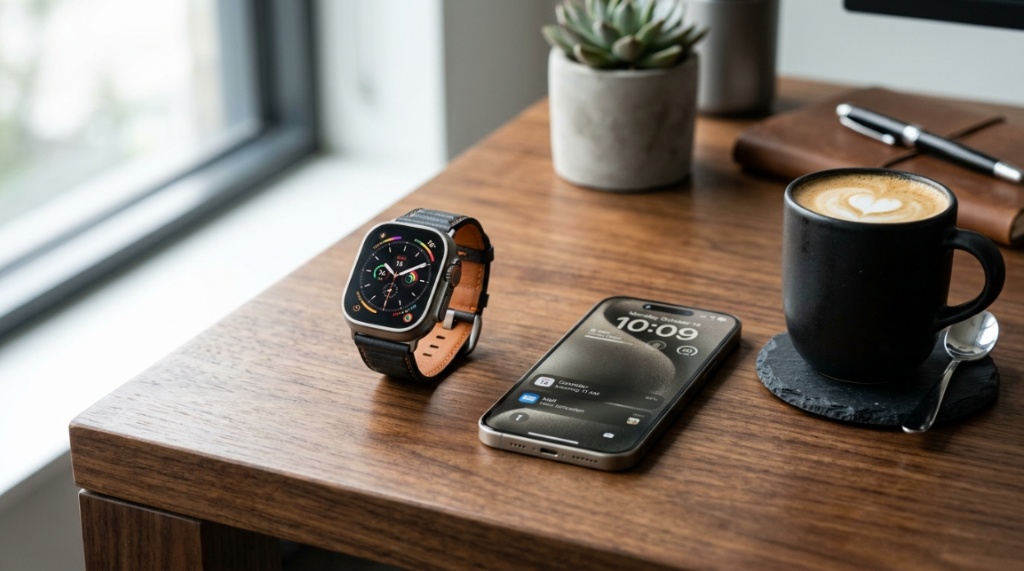
You’ve saved up for a serious upgrade. You want a premium smartwatch in California that doesn’t just tell time, but acts as a health coach, a style statement, and a productivity hub. Yet, the sheer volume of choices—from titanium finishes to AMOLED displays—can feel overwhelming. You’re worried about overpaying for hype or buying a device that won’t integrate with your iPhone or Android. You need a clear, practical filter to cut through the noise.
This guide is your roadmap. We’ll break down the best premium smartwatch in CA by analyzing real-world performance, battery life, ecosystem compatibility, and the features that actually matter in 2026. We’ll compare top contenders, dissect key specs, and help you match a watch to your specific lifestyle—whether you’re an outdoor athlete, a busy executive, or a fashion-forward trendsetter. By the end, you’ll have a confident decision and a clear understanding of what makes a smartwatch truly “premium” beyond the price tag.
What Defines a Premium Smartwatch in 2026?
A premium smartwatch is no longer just about a high price. It’s a combination of cutting-edge health sensors, durable materials, seamless connectivity, and a display that feels like magic on your wrist. In 2026, these devices have evolved into proactive health and productivity tools. If you are also exploring affordable options or want to know how different models compare across price ranges, be sure to check out our Unbiased Review Format for Budget Smartwatches.
Sensors and Health Tracking Capabilities
Today’s top-tier watches go beyond step counting. Look for advanced metrics like ECG (electrocardiogram), blood oxygen (SpO2) monitoring, sleep apnea detection, and—newer—continuous glucose monitoring (CGM) via third-party sensors. The best premium smartwatch in CA must offer actionable insights, not just raw data.
Display and Build Quality
Premium means an always-on, bright (2,000+ nits) LTPO AMOLED display that’s readable in direct California sun. Materials matter: aerospace-grade titanium, sapphire crystal glass, and ceramic backs are the hallmarks of luxury. These aren’t just for looks—they resist scratches and corrosion.
Ecosystem Integration
The watch should feel like a native extension of your phone. For Apple users, that’s the tight integration of watchOS. For Android users, it’s the robust Wear OS 4.0 or Samsung’s Tizen-based ecosystem. A premium watch should seamlessly hand off calls, messages, and app data.
Why Choose a Luxury Smartwatch Over a Standard One?
Choosing a luxury smartwatch is an investment in longevity, accuracy, and a superior user experience. A standard budget watch may cover basics, but it often lacks the refined finish, advanced sensors, and long-term software support that defines premium ownership.
The Longevity Factor: Software and Hardware
Premium watches receive major OS updates for 4-5 years, ensuring your watch stays secure and gets new features. They also feature replaceable bands and batteries (in some models), making them a more sustainable choice than disposable budget gadgets.
Health Data Accuracy and Clinical Validation
Luxury watches partner with medical institutions for algorithm validation. This means the heart-rate data or sleep stages you see are more likely to be accurate against clinical-grade equipment. For health-conscious users, this is a non-negotiable advantage.
Resale Value and Status
A premium watch retains value. Unlike a $50 fitness band that becomes e-waste, a luxury smartwatch from Apple, Samsung, or Garmin can be sold for 40-50% of its original cost after two years, making the total cost of ownership lower than you might think.
Which Smartwatch Brand Suits Your Lifestyle in CA?
Your lifestyle dictates the right device. An ocean swimmer needs different hardware than a Silicon Valley executive. Let’s break down the primary user profiles to match you with the ideal device.
For the Apple Ecosystem Enthusiast
If you live in an iPhone world, the Apple Watch Ultra 3 (or Series 10) is the default recommendation. The new Ultra 3 offers a brighter display, faster charging, and an updated compass and emergency siren. It’s the most intuitive experience for iOS users.
For the Android Power User
Samsung’s Galaxy Watch 7 Pro or Google’s Pixel Watch 4 are the top contenders for Android. They offer deep integration with Google services, advanced sleep coaching powered by Fitbit, and excellent battery life. They are more customizable than their Apple counterparts.
For the Serious Athlete and Adventurer
For running, trail hiking, or triathlon training, Garmin’s Epix Pro Gen 2 (or the newer Fenix 8) is simply unmatched. It offers multi-band GPS, mapping, training readiness scores, and battery life measured in weeks, not days. It’s an investment in performance.
How Do Premium Smartwatch Battery Lives Compare in 2026?
Battery life is the biggest pain point for premium watches. While an always-on display is standard now, how long you can go between charges varies enormously. You’re looking at anywhere from 1.5 days to 15 days depending on your features.
Apple Watch Ultra 3: The All-Day Fast Charger
Apple promises 36 hours of normal use, but with heavy GPS use, expect to charge it daily. However, the fast charger can get you 80% in 45 minutes, making it a non-issue for most urban users who charge while showering.
Garmin Epix Pro: The Endurance King
With a solar charging lens, the Epix Pro can go 10 days in smartwatch mode and up to 30 days in battery saver. For a week-long camping trip or alpine climb, this is the only viable option.
Pixel Watch 4 vs. Galaxy Watch 7 Pro
The Pixel Watch 4 finally improved to 36 hours with the always-on display off. The Galaxy Watch 7 Pro, with its larger battery, manages around 48 hours with heavy use. Neither matches Garmin but is sufficient for most.
| Brand & Model | Battery Life (Approx.) | Charging Speed | Best For |
|---|---|---|---|
| Apple Watch Ultra 3 | 36 hrs | Fast (45 min to 80%) | iPhone Users |
| Samsung Galaxy Watch 7 Pro | 48 hrs | Standard (1.5 hrs) | Android Users |
| Garmin Epix Pro Gen 2 | 10-30 days | Slow (2 hrs) | Athletes/Adventurers |
What Are the Must-Have Features for California Buyers?
California’s diverse climate—from coastal fog to desert heat—demands specific features. Beyond the basics, here are the functionalities that matter most in 2026.
Advanced GPS and Navigation (Offline Maps)
When you venture into Yosemite or along the Big Sur coast, you can’t rely on cellular data. Top-tier watches now include offline topographical maps and breadcrumb routes. Garmin leads here, but Apple’s new topographic maps are catching up.
Emergency SOS and Crash Detection
In a state with frequent earthquakes and remote trails, safety is paramount. The best premium smartwatch in CA must have loud sirens, crash detection, and international emergency calling. All three major brands offer this, but Apple’s integration with local services is seamless.
Climate Adaptability (Water and Dust Resistance)
Look for an IP68 rating (dustproof and waterproof to 50m) and a moving ring or dial (for Garmin) that functions with gloves. A sapphire crystal screen is essential to resist sand scratches at the beach.
Is a Cellular (LTE) Smartwatch Worth the Extra Cost?
Yes, for most professionals and runners, an LTE connection is a game-changer. It frees you from your phone, allowing you to stream music, make calls, and receive notifications anywhere. However, it comes with a subscription fee tied to your carrier plan.
The Freedom of Untethered Use
Go on a run without your phone. Leave your phone at home during a day trip. Your watch remains connected. You can even use maps and navigation without your phone nearby, as long as you have an active data plan.
Carrier Costs and Availability in California
In California, all major carriers (AT&T, Verizon, T-Mobile) support LTE smartwatches. Plans typically cost $5-$15/month. Many people find this fee worth the freedom. However, if you’re budget-conscious, you can buy a GPS-only model and rely on Wi-Fi and your phone’s Bluetooth.
How Does Wearable Software Impact User Experience (OS compared)?

Hardware gets the headlines, but software defines your daily interactions. A clunky interface will frustrate you no matter how beautiful the watch is. As of 2026, the software landscape has solidified.
watchOS 12 (Apple)
WatchOS 12 continues to be the smoothest, with an intuitive Digital Crown and a focus on health. The new “Vitals” app aggregates your sleep, HRV, and SpO2 into a single score. It’s powerful but can be overwhelming with too much data.
Wear OS 5.0 (Samsung & Pixel)
Google’s Wear OS 5.0 is now truly fluid. It offers incredible widget-based navigation and tighter integration with Google Assistant. The Pixel Watch’s clean UI is a highlight, while Samsung adds a dense layer of Samsung Health features.
Garmin’s Proprietary OS
Garmin’s OS is not as flashy, but it is incredibly functional and performs predictably with exceptional battery efficiency. It’s geared toward data analysis rather than app polish, with a steeper learning curve but deeper metrics.
Top 3 Premium Smartwatches Under $900 in CA
If you’re searching for the best premium smartwatch in CA without crossing the $1000 threshold, this is your sweet spot. Here are the top three picks that balance luxury, function, and price in 2026.
Apple Watch Ultra 3 (Titanium)
Price: ~$849
Pros: Best display, excellent health features, huge app selection, superior safety.
Cons: Only works with iPhone, 36-hour battery is a daily charge for heavy users.
Samsung Galaxy Watch 7 Pro
Price: ~$649
Pros: Great for Android, fantastic sleep tracking, fast charging, durable Titanium.
Cons: The rotating bezel is missed, software can be laggy after updates.
Garmin Epix Pro Gen 2 (47mm)
Price: ~$899
Pros: Best battery life, most accurate GPS, excellent physical buttons for workouts.
Cons: Not a great smart assistant, heavy for sleep tracking, outdated speaker.
Why Is Price a Factor in Premium Rankings?
Price is not just about a high number. It reflects the research and development, materials, and exclusivity. However, the highest price doesn’t always mean best for you. Understanding where your money goes ensures you’re not overpaying for a logo.
Build Material and Finishing
A watch with a titanium case and sapphire crystal will cost 30-40% more than a standard aluminum model. But it also offers 5x the scratch resistance and lowers skin irritation allergies (hypoallergenic).
Software Support and R&D
You’re also paying for years of algorithm development. For instance, Apple’s new sleep apnea detection involves complex machine learning that can only run on new hardware. Your fees help fund these life-saving innovations.
How to Find the Best Premium Smartwatch in CA: A Buyer’s Checklist
Follow these simple steps to make an informed choice. Don’t rely on internet hype; use this checklist to evaluate your needs against the hardware. You can also browse a comparison like this one from luxuryonsales to see current market leaders.
Step 1: Verify Phone Compatibility
Check if the watch is compatible with your smartphone. Apple only works with iPhone, Samsung works with Android and some iOS, but Garmin is universal.
Step 2: Evaluate Your Daily Routine
Choose a watch that matches your primary use. If it’s for work, prioritize readability and notifications. If it’s for sport, prioritize GPS and battery.
Step 3: Set a Realistic Budget for Accessories
Premium watches often use proprietary bands. These can cost $50-$150 each. A good leather or titanium band can be as expensive as the watch itself. Search for the best premium smartwatch in CA that also has a large aftermarket band ecosystem to save money.
Can a Premium Smartwatch Replace Your Doctor?
No, absolutely not. A smartwatch is a trend indicator, not a diagnostic tool. However, the latest models are incredibly adept at identifying irregularities that warrant a check-up. They serve as a proactive early warning system.
ECG and AFib Detection
The ECG feature on Apple, Samsung, and Garmin watches can generate a rhythm strip. If you feel palpitations, you can capture this strip and send a PDF to your physician. This is definitive proof of its utility.
The Role of Continuous Monitoring
Watches can detect atrial fibrillation in real-time, which is a major cause of stroke. They also track HRV (Heart Rate Variability) to detect stress and fatigue. This is not a diagnosis, but it is actionable data to discuss with a clinician.
Frequently Asked Questions
What is the best premium smartwatch for an iPhone user?
The Apple Watch Ultra 3 is the definitive choice for iPhone users, offering the fastest processor, best health sensors, and the largest collection of apps optimized for watchOS.
What is the best premium smartwatch for an Android user?
For Android, the Galaxy Watch 7 Pro offers the best build quality and features, while the Pixel Watch 4 provides the fastest software experience. Both are excellent in 2026.
How accurate is the heart rate sensor on premium watches?
In consistent exercise, the HR sensors on Apple, Samsung, and Garmin watches are within 2-5 beats per minute of a chest strap. They are very accurate for everyday use and interval training.
Can I answer calls on a premium smartwatch without my phone nearby?
Yes, if you purchase an LTE/Cellular model and have an active data plan with your carrier, the watch has its own phone number via eSIM and can make and receive calls independently.
How often should I replace the battery on a premium smartwatch?
Most modern premium smartwatches have a battery lifespan of around 3-5 years before you notice a significant degradation in capacity. They are generally designed to last until your next phone upgrade cycle.
Is it worth waiting for a newer model release?
If you are not in a rush, waiting for major tech events (usually September for Apple) can yield discounts. However, the newest models in 2026 are already mature, and previous generations offer outstanding value.
Do I need a screen protector for the premium titanium watches?
If your watch has a sapphire crystal lens, you do not need one—it is scratch-resistant. If it has Gorilla Glass, adding a tempered glass protector is a wise, low-cost insurance policy.
Conclusion: Your Next Upgrade Awaits
Finding the perfect premium smartwatch is a personal journey that balances needs, style, and tech. The right device will blend into your routine so seamlessly that it becomes an essential partner for health and productivity. We’ve covered the key differentiators: battery, sensors, ecosystem, and build quality—all critical to making a wise investment in 2026.
Now it’s time to act. Review your daily habits, choose between the top three contenders identified here, and decide if an LTE connection is worth it for you. Don’t forget to consider the resale value and long-term ecosystem benefits. Your wrist is the final boss. Embrace the upgrade and enjoy a smarter, more connected California lifestyle.